Vitrectomy
Vitrectomy
op -1

What Is Vitrectomy?

Vitrectomy is an eye surgery employed to address issues related to the retina and vitreous of the eye. During this procedure, an ophthalmologist may:

  • Extract blood or other substances obstructing proper light focus on the retina.
  • Eliminate scar tissue causing wrinkles or tears in the retina, leading to impaired vision.
  • Assist in the repair of a detached retina, where it has pulled away from the eye wall.
  • Extract a foreign object lodged in the eye due to an injury.

Vitrectomy, a surgical procedure performed by ophthalmologists, involves the removal of a portion or the entirety of the vitreous from the eye’s center. This is replaced with either a saline solution or a gas/oil bubble, addressing various eye conditions such as retinal problems or the presence of foreign objects.

As the eye heals after vitrectomy, the introduced saline solution or bubble is gradually replaced by the eye’s own natural fluid, known as aqueous humor. This gradual transition facilitates the restoration of normal eye function, contributing to a successful recovery from the surgical intervention. 

When is vitrectomy done?

Your ophthalmologist might suggest a vitrectomy if you are dealing with any of the following diseases or conditions:
  • Diabetic retinopathy with complications such as bleeding or scar tissue impacting the retina or vitreous gel.
  • Certain types of retinal detachment, characterized by the lifting of the retina away from the back of the eye.
  • Macular hole, which involves a hole or tear in the macula.
  • Macular pucker, characterized by wrinkles or creases in the macula.
  • Infection in the eye known as endophthalmitis.
  • Severe eye injury.
  • certain problems during cataract surgery
optione
optione

What happens during a vitrectomy?

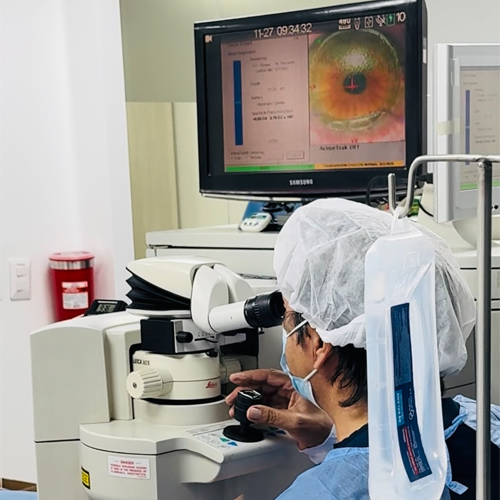
Vitrectomy is commonly conducted in an outpatient surgery center, where local or general anesthesia is administered to numb the eye. The surgical duration can vary from one to several hours. Utilizing small incisions or specialized blades, the ophthalmologist inserts instruments into the white of the eye (sclera). With the aid of a microscope for precise visualization, the surgeon employs tiny tools to perform various essential steps during the procedure.

This meticulous process aims to address specific eye conditions or complications effectively. The surgeon’s expertise ensures that the surgery is tailored to the individual’s needs, contributing to the overall success and outcome of the vitrectomy.

Stye and Chalazion Symptoms

  • An intensely painful, red bump situated along the edge of the eyelid near the base of the eyelashes, with the potential to cause swelling of the entire eyelid.
  • Typically, there is a small pus-filled spot at the center of the bump.
  • feeling like something is in your eye
  • Experiencing a sensation of scratchiness in the eye.
  • Feeling sensitivity to light.
  • Observing crustiness along the margin of the eyelid.
  • Experiencing tearing or increased tearing in that eye.
A chalazion may form without exhibiting noticeable symptoms. However, when symptoms do arise, they can encompass:
  • The presence of a bump on the eyelid, at times progressing to redness and swelling, with occasional tenderness.
  • rarely, there may be a complete swelling of the eyelid.
  • Blurred vision may occur if the chalazion reaches a significant size, pressing on the eyeball.
optione
optione

What happens during a vitrectomy?

Anyone can develop a stye or chalazion, but the likelihood increases if you have:
  • Blepharitis, a condition impacting the edge of your eyelid.
  • A history of experiencing a stye or chalazion in the past.
  • A skin condition, such as acne rosacea or seborrheic dermatitis.
  • Diabetes or other medical problems

How Do You Get Rid of a Stye or a Chalazion?

Here are ways to treat your stye or chalazion:

Warm compresses:  To alleviate symptoms, soak a clean washcloth in hot water and apply it to your eyelid for 10–15 minutes, repeating 3–5 times daily. Ensure the cloth stays warm by frequently immersing it in hot water. For a chalazion, this warm compress aids in opening and draining the clogged oil gland. Gently massage the area with a clean finger to assist the gland in clearing itself.

AntibioticsIn: If you have an infected stye, your ophthalmologist might recommend an antibiotic prescription.

Steroid shots In cases of significant swelling with a chalazion, your ophthalmologist might administer a cortisone steroid injection to alleviate the swelling.

Surgery to drain the area: If your stye or chalazion persists, affecting vision or not resolving, drainage may be necessary. Typically performed in the doctor’s office under local anesthesia, this surgical procedure can address the issue.

In instances where a stye or chalazion recurs frequently, your ophthalmologist may opt for a biopsy. This involves the removal and examination of a small tissue sample, aiding in the assessment of potential underlying serious eye problems.

Do not squeeze or try to pop a stye or chalazion
Avoiding this can prevent the infection from spreading into your eyelid. Refrain from using eye makeup or wearing contact lenses when you have a stye or chalazion. 

Risk Factors for the Occurrence of Glaucoma in Ocular Hypertension

  • INTRAOCULAR PRESSURE: The risk of suffering from glaucoma increases with the level of IOP.
  • AGE: The older the age, the greater the risk
  • African ethnicity is associated with increased risk of glaucoma.
  • Men are more likely to suffer from glaucoma.
  • The presence of heart disease is a significant risk factor.
  • Myopia
  • Diabetes
  • Family background

CONCLUSIONS

  • Early treatment reduces the cumulative incidence of glaucoma
  • The effect is greater in high-risk people
  • Personalized evaluation is useful and helps guide treatment
  • The use of systemic medication can influence IOP, raising it (Corticosteroids) or reducing it (Beta-blockers).
  • RETINA photographs are essential for a detailed analysis of the optic nerve.

Based on your specific case, the doctor may perform any of the following tests:

Visual Field Test

Lectus sit amet est placerat in egestas erat imperdiet sed. Mauris rhoncus aenean vel elit scelerisque. Lobortis nibh tellus molestie nunc non blandit. Tellus in hac habitasse platea dictumst vestibulum rhoncus est pellentesque.

Binocular Vision Assessment

Lectus sit amet est placerat in egestas erat imperdiet sed. Mauris rhoncus aenean vel elit scelerisque. Lobortis nibh tellus molestie nunc non blandit. Tellus in hac habitasse platea dictumst vestibulum rhoncus est pellentesque.

Digital Retinal Imaging

Lectus sit amet est placerat in egestas erat imperdiet sed. Mauris rhoncus aenean vel elit scelerisque. Lobortis nibh tellus molestie nunc non blandit. Tellus in hac habitasse platea dictumst vestibulum rhoncus est pellentesque.

Visual Acuity Test

Sagittis purus sit amet volutpat consequat mauris. At lectus urna duis convallis convallis tellus id interdum. Vitae justo eget magna fermentum. Adipiscing tristique risus nec feugiat. Justo nec ultrices dui sapien eget mi proin

Corneal Mapping

Sagittis purus sit amet volutpat consequat mauris. At lectus urna duis convallis convallis tellus id interdum. Vitae justo eget magna fermentum. Adipiscing tristique risus nec feugiat. Justo nec ultrices dui sapien eget mi proin

Eye Pressure Test

Sagittis purus sit amet volutpat consequat mauris. At lectus urna duis convallis convallis tellus id interdum. Vitae justo eget magna fermentum. Adipiscing tristique risus nec feugiat. Justo nec ultrices dui sapien eget mi proin

"Our optix Laser team is ready to look after all your eye emergency needs. Take care of your eye health!"

Dr Fabian Sanabria

Optometrist

Book an Appointment Today

HD Laser Refractive Surgery

HD Laser Refractive Surgery

It is the most up-to-date procedure to effectively correct refractive errors such as myopia

Corneal Transplant-Keratoplasty

Corneal Transplant-Keratoplasty

Corneal transplant consists of replacing the host’s diseased corneal tissue with a healthy cornea from a donor.

optione

Glaucoma

Glaucoma

It is a chronic progressive optic neuropathy that appears in adulthood.

Refractive Surgery

Refractive Surgery

Refractive surgery is the surgical correction of refractive errors of the eye, such as myopia..

Book an Eye Care Appointment Today

HD Laser Refractive Surgery

It is the most up-to-date procedure to effectively correct refractive errors such as myopia

Corneal Transplant-keratoplasty

Corneal transplant consists of replacing the host’s diseased corneal tissue with a healthy cornea from a donor.

optione

Glaucoma

It is a chronic progressive optic neuropathy that appears in adulthood.

Refractive Surgery

Refractive surgery is the surgical correction of refractive errors of the eye, such as myopia..

Why choose the Optix Clinic?

Why Optix Laser Clinic?

optione
Highly Qualified Specialists

Highly Qualified Specialists

Our team comprises highly qualified specialists, bringing exceptional expertise to deliver top-notch solutions tailored to your needs.

optione
Modern Ophthalmology

Modern Ophthalmology

Revolutionizing eye care through modern ophthalmology techniques, ensuring precise diagnoses and cutting-edge treatments for optimal vision health.

0 +
Visual Exams
0 +

Performed Laser Surgical Corrections

0 +

Online Appointment Processed by the Opto

Why Optix Laser Clinic?

optione

Highly Qualified Specialists

Our team comprises highly qualified specialists, bringing exceptional expertise to deliver top-notch solutions tailored to your needs.

optione

Modern Ophthalmology

Revolutionizing eye care through modern ophthalmology techniques, ensuring precise diagnoses and cutting-edge treatments for optimal vision health.

0 +

Eye Examination and
Сonsultation

0 +

Performed Laser Surgical Corrections

0 +

Online Appointment Processed by the Opto

Contact Us

Contact Us

MM slash DD slash YYYY

Shopping Cart

No products in the cart.